
The world is an enormous and unfamiliar place for a newborn baby monkey. At such a young age, every sound, movement, and new experience can feel overwhelming. Completely dependent on its mother, a tiny newborn needs warmth, nourishment, protection, and constant reassurance to feel safe. Even the smallest separation or unfamiliar situation may lead to little cries as the baby seeks the comfort of its closest caregiver.
In this touching wildlife moment, the newborn baby appears frightened and cries out, seemingly calling for its mother. Its tiny voice reflects the vulnerability of a young animal that is still adjusting to life outside the womb. For a newborn monkey, staying close to its mother is essential. Her familiar presence, warmth, and gentle touch can provide a sense of security during these earliest stages of development.
A mother monkey plays an important role in helping her newborn adapt to its surroundings. Through close contact, nursing, grooming, and protective behavior, she provides much of the care her baby needs. When a newborn cries, it may be communicating hunger, discomfort, a need for contact, or a response to something unfamiliar. Although the baby’s exact feelings cannot be known from its cries alone, these vocalizations are a natural part of early communication.
Watching such a small and delicate animal call out can be an emotional experience. The newborn’s dependence reminds us how important maternal care is in the animal world. Every day brings new experiences, and with its mother’s continued care, this tiny baby has an opportunity to grow stronger, develop confidence, and gradually discover the world around it.
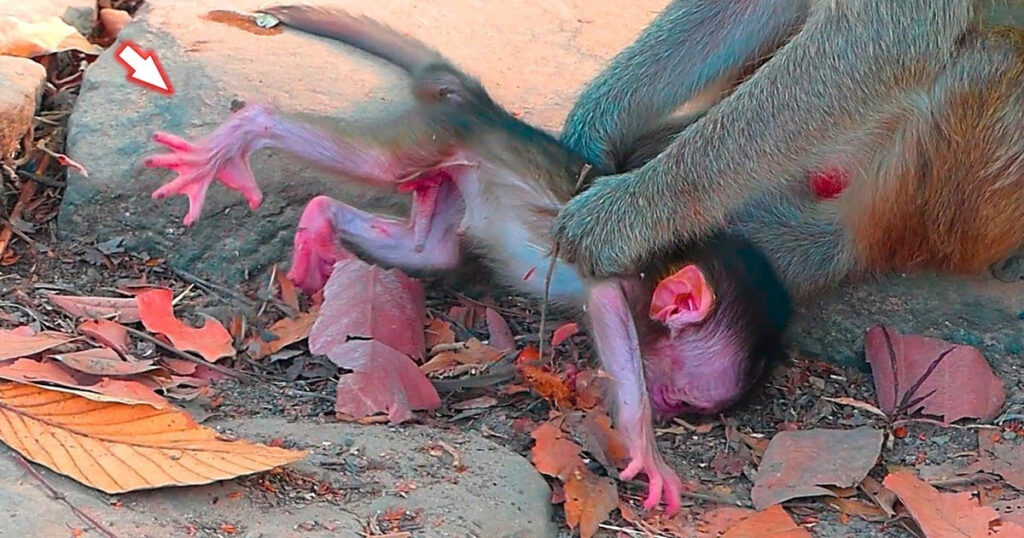
As the moment unfolds, the newborn baby continues to make small cries that draw attention to its vulnerability. Its tiny body and delicate voice capture the challenges faced by a young monkey during the earliest days of life. Still unfamiliar with the world around it, the baby depends on close maternal contact to meet its basic needs and feel secure.
A newborn monkey’s calls are an important way of communicating with its mother. These sounds can signal a need for warmth, nourishment, physical contact, or reassurance. While the baby’s cries may sound frightened to human viewers, it is important to remember that vocalizations are a normal part of infant monkey behavior. Without knowing the full circumstances of the scene, it is difficult to determine precisely what the newborn is experiencing.
A mother’s response can make a meaningful difference during these early stages. When she stays close, holds her baby, or allows it to nurse, she helps provide the physical care and security that a newborn requires. The bond between a mother and her infant develops through these repeated interactions, helping the baby become familiar with her presence and responsive care.
For such a tiny animal, even a short period of uncertainty can appear overwhelming. Its cries remind us that newborns have very limited independence and rely on their mothers for nearly everything. With appropriate care, warmth, and nourishment, the baby can gradually develop the strength and abilities it will need as it grows.
This tender wildlife moment offers a glimpse into the early relationship between a mother and her newborn. It encourages us to appreciate the importance of patience, protection, and maternal care in nature. Although the baby’s journey is only beginning, the care it receives during these first stages of life can play an important role in its future growth and well-being.