
The forest can be a difficult place for a young monkey to understand. Every movement, sound, and interaction becomes part of a lesson in growing up. In this touching scene, a very young baby monkey appears frightened during a tense interaction with an adult monkey. The baby’s cries are easy to notice, and its small body language suggests that it is feeling uncomfortable and unsure of what is happening.
It is important not to assume what the adult intended. Monkey behavior can include many forms of communication that may look upsetting to human observers, while the animals themselves are responding to their social environment in ways we may not fully understand.
Still, watching such a small baby become fearful is difficult. At this age, a young monkey depends heavily on nearby adults for security, guidance, and protection. The baby’s vocalizations remind us how vulnerable young wildlife can be as they learn to navigate life within their troop.
The baby’s cries remain the most emotional part of this moment. Instead of moving confidently through its surroundings, the little monkey appears cautious and unsettled, watching the adult closely and trying to respond to the situation around it.
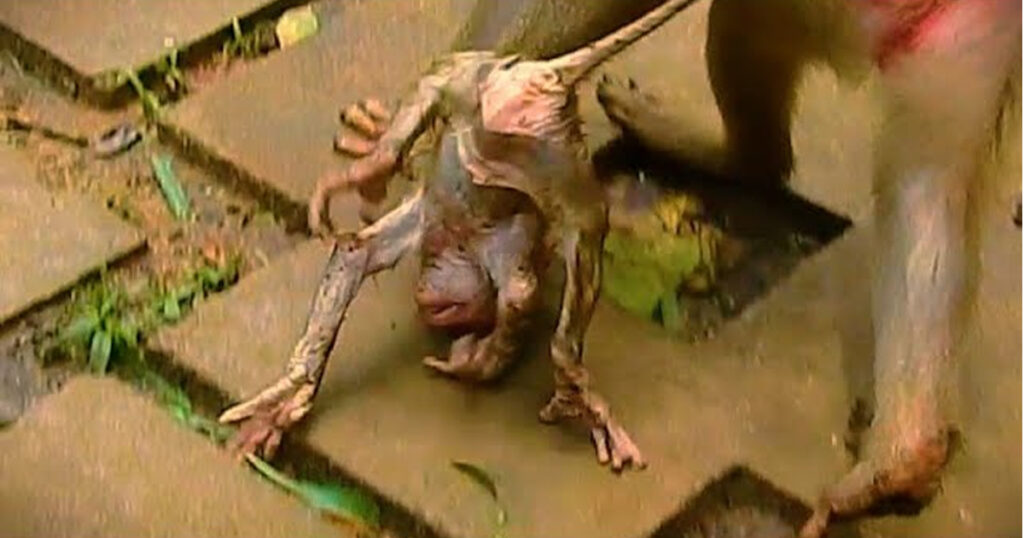
For a young monkey, communication is much more than sound. Body position, facial expressions, movement, and distance from other members of the troop can all carry meaning. A baby may cry when frightened, separated, uncomfortable, or simply overwhelmed by an interaction it does not yet understand.
What makes this scene especially touching is the contrast between the baby’s small size and the larger adult beside it. The baby is still learning how to respond to the complicated social world around it. Moments like this show that growing up in the wild is not always gentle or easy. Young animals must gradually learn boundaries, relationships, and the behavior of other members of their group.
We cannot know exactly what the adult monkey was thinking, so the most honest way to view this scene is simply to observe what is visible: a very young monkey appears frightened and cries during a tense interaction. Its vulnerability naturally draws our attention and reminds us to watch wildlife with patience, care, and respect.