
For a tiny baby monkey, the world can feel like a very big place, especially when there is no familiar companion nearby. At such a young age, staying close to others can provide a sense of security, warmth, and comfort. Even a brief moment of separation may leave a little one feeling uncertain about what to do next.
In this touching wildlife moment, a small baby monkey appears to be struggling with the feeling of being alone. His little body and repeated cries reflect a need for closeness and reassurance. He seems unsettled, calling out loudly as though hoping someone will come near and keep him company. His delicate voice makes the moment especially moving, reminding us how important social bonds are in the lives of young monkeys.
For baby monkeys, their mothers and other familiar members of the troop can play an important role in providing protection, comfort, and opportunities to learn. Their early experiences help them gradually become more confident as they explore their surroundings. While this little one appears to be having a difficult moment, his behavior is also a natural part of communicating his needs.
This gentle yet emotional scene offers a glimpse into the vulnerable early stages of a young monkey’s life, when even a little companionship can make a meaningful difference.
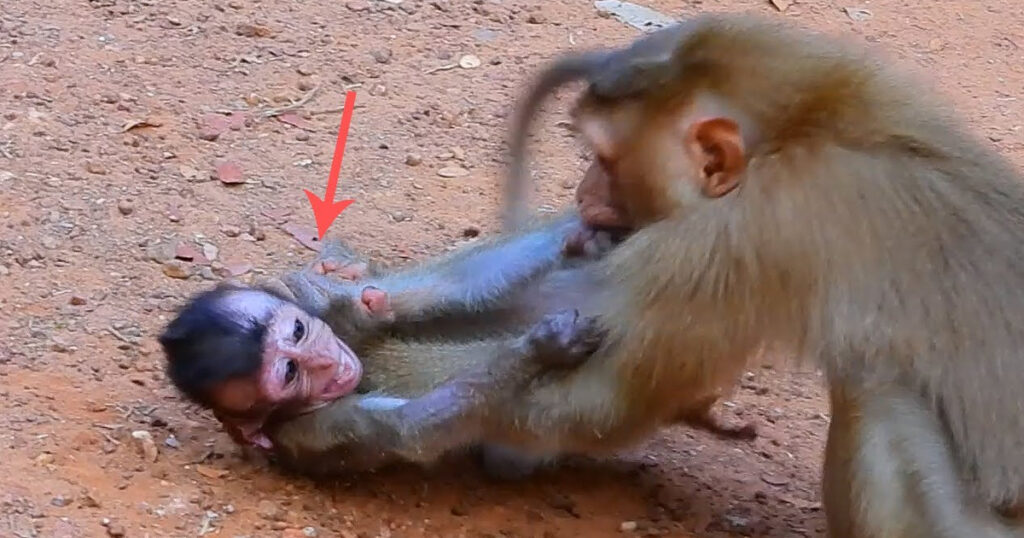
As the moment continues, the tiny baby monkey’s cries draw attention to his apparent need for company. He seems uncomfortable being by himself, expressing his feelings through repeated, high-pitched calls. His small movements and vocalizations show how young monkeys communicate when they are seeking attention, contact, or reassurance.
For a baby still learning about the world, having a familiar presence nearby can be especially comforting. Mother monkeys often provide more than nourishment; they also offer warmth, protection, and opportunities for their babies to develop social skills. Close contact can help young monkeys feel secure while they gradually become more independent.
Although the baby’s cries may sound heartbreaking to human ears, vocalizing is a natural form of communication among monkeys. It can help a young animal maintain contact with its mother or other members of the troop. Without knowing exactly what the baby is experiencing, it is best to understand his behavior as an expression of apparent distress or a desire for closeness.
Moments like this remind us that growing up in the wild involves both comfort and uncertainty. Every experience contributes to a young monkey’s development, from learning to stay close to familiar companions to gradually exploring the environment with greater confidence.
This little baby’s calls offer a tender reminder of the importance of family bonds and social connections in monkey life. His need for companionship reflects the natural relationships that help young monkeys navigate their early days.