
Food is an important part of every animal’s daily life, and for a young or vulnerable monkey, finding enough nourishment can be especially important. Monkeys use a variety of calls and behaviors to communicate with others in their social group. When a monkey appears to call repeatedly, it may be responding to hunger, seeking attention, or communicating another need.
In this video, the little monkey appears restless and vocal. His behavior may suggest that he is looking for food or trying to attract attention. Although we cannot know exactly why he is crying from the footage alone, the moment is naturally touching because he appears to be having a difficult time.
Young monkeys often depend on older members of their group while they learn where to find food and how to interact with their surroundings. A familiar caregiver or troop member can provide reassurance while a young animal develops these important skills.
It is important not to assume that every cry means hunger, but the behavior shown here reminds us that animals have many ways of expressing their needs. Watching carefully and respectfully can help us better understand their natural behavior without adding explanations that the video cannot confirm.
For this little monkey, we hope the moment passes peacefully and that he is able to find appropriate food and comfort within his environment.
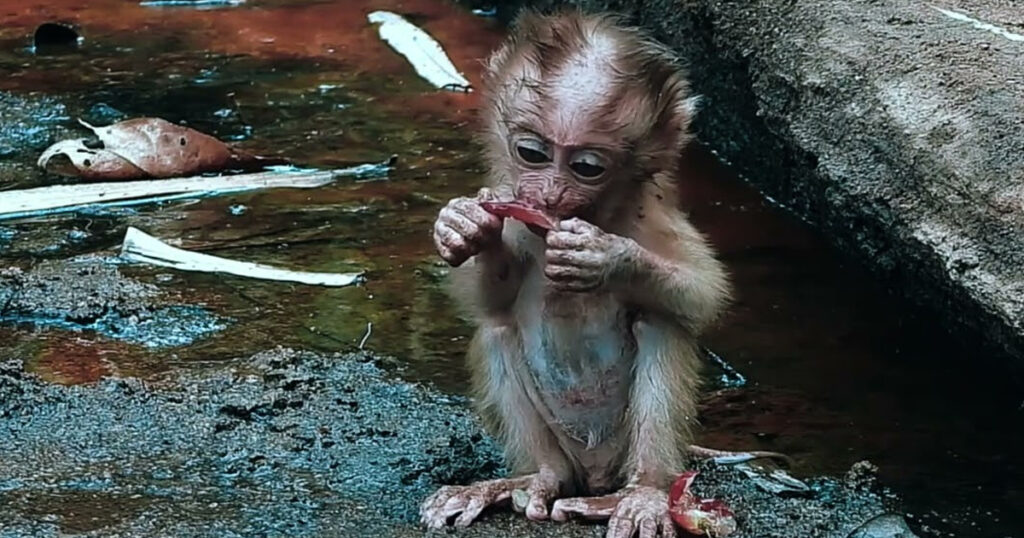
The little monkey’s repeated calls make this a particularly tender moment to watch. He appears to be looking for food or reassurance, although his exact reason for crying cannot be confirmed from the video alone. Animals can vocalize for many reasons, including hunger, separation, discomfort, excitement, or a desire to attract attention.
If he is genuinely hungry, access to an appropriate diet is essential for his health. For young monkeys especially, proper nutrition supports growth and development. Their dietary needs can also change as they become older and begin exploring different foods.
What makes this moment meaningful is the way it reminds us that wildlife is made up of individual animals with different needs and personalities. A small monkey may communicate loudly when something is important to him, and those calls can be part of normal social behavior.
Rather than assuming exactly what he is feeling, it is better to observe his behavior with patience. If the monkey is under human care, experienced caregivers should make sure he receives appropriate nutrition, clean water, and a safe environment. If he is living with a troop, staying connected with appropriate group members can also be important.
We hope this little monkey finds the food, companionship, and peaceful surroundings he needs. His small voice offers a gentle reminder that caring for wildlife begins with understanding and respecting what animals naturally communicate.