
For a very young monkey, communication begins long before it can explore the world independently. Tiny babies rely heavily on adults for nourishment, warmth, protection, and reassurance. Their calls are an important part of how they communicate their needs and maintain contact with those around them.
In this video, a small baby monkey can be seen vocalizing while appearing to seek care and nursing. The baby’s size and behavior make it clear that it is still at an early stage of development and depends on others.
We cannot know exactly what the baby is asking for from its calls, but vocalization is a natural part of communication among young primates. It may be seeking contact, food, attention, or simply responding to its surroundings.
These early moments can be especially meaningful because they show how dependent a young animal is during the beginning of its life. The baby is still learning how to communicate and interact with the world.
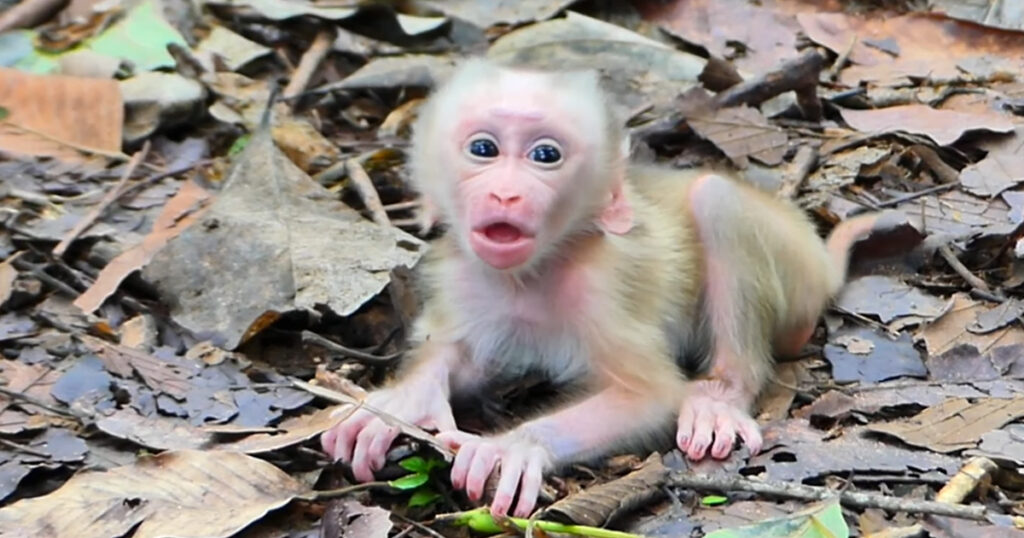
Rather than adding a dramatic explanation, this scene is best appreciated as a simple and tender observation of a young monkey expressing itself naturally.
The baby monkey’s repeated calls make the scene particularly touching. Its small voice and movements show a young animal actively communicating with the adults around it. While we cannot determine exactly what each call means, the behavior is consistent with the natural ways young primates communicate.
Nursing is also an important part of early development for many young mammals. A baby monkey may remain close to its mother while nursing, resting, or seeking physical contact. These interactions help maintain the close relationship between mother and baby during a highly dependent stage of life.
What makes this moment special is its simplicity. There is no need to create an exaggerated story around the footage. A tiny monkey is simply using its voice and behavior to communicate, giving viewers a glimpse into everyday wildlife.
As the baby grows, it will gradually become more capable of exploring its surroundings and interacting with others. For now, moments of seeking care and nursing remain an important part of its early journey.
This quiet scene reminds us that even the smallest wildlife behaviors—an infant’s call, a movement toward an adult, or a search for nursing—can reveal something meaningful about life in the wild.